Before we even start thinking about using AI - we have to ask ourself the question of what's right and wrong when it comes to using AI! What are the ethically and morrally factors (is AI the root of all evil? - will it cause harm either intentionally or unintentionally).
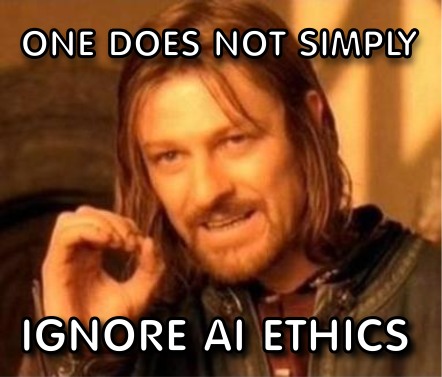
You cannot simply ignore AI ethics (questions of discrimination, fairness, and humanity)!
Just to note - ethics and AI is a rabbit hole - their are many aspects and discussions around ethical AI in the literature, however, the most topics include: transparency, justice and fairness, non-maleficence, responsibility, privacy, beneficence, freedom and autonomy, trust, sustainability, dignity, solidarity.
First things first, what's right and wrong?
As if humans have figured that out, now we're expecting AI to toe the line? It's a complex dance between potential benefits and the looming threats. We're dealing with machines that can either be our saviors or the harbingers of doom.
Enter the ethical frameworks for AI. Sure, we have guidelines, but who's following them? It's like handing a rulebook to a group of rebels and expecting them to play fair. These frameworks are often nothing more than paper tigers, lurking in the background while developers forge ahead with their creations, often without a second thought to the ethical implications.

SARA (Syntethic Artificial Robotic Agent) will search the internet to find out all your details, friends, trends, history, then it will be able to phone you up, email you, follow you on social media.
Having a AI system phone you up and try and sell you something isn't illegal - you might not even know you're talking to a computer. The voice patterns, responses and tone can be realistic (indistinguishable from a real-human). Is it morally correct to have a AI agent behave like without telling you it's not human? For example, imagine we created an agent called 'SARA' (which stands for Syntethic Artificial Robotic Agent). SARA could call you up on your phone, and say 'Hello, my name is Sara, do you have a minute to talk?'. SARA, an AI system, has searched the internet and gathered a vast amount of information about you - your search history, past purchases, your address, social media patterns and more - now it's on the phone to you - trying to control you! Make you buy products, try services, volunteer, ... the list is endless. The hidden horrors of AI!
The ethical and moral conundrum around AI are often debated, but is anything being done about them? Are ethical guidelines beiong woven into the fabric of AI research and development? In short: NO! While developers race against time, in the haste to meet deadlines and make money, ethics has become a casualty. It's like putting a Band-Aid on a gunshot wound and hoping for the best.
Ethical dilemmas in AI are not some distant, hypothetical scenario. They're knocking on our doors, and the consequences are bone-chilling. Picture this: AI algorithms making life-altering decisions for us, from job applications to medical diagnoses. We're not talking about some sci-fi horror; this is the reality we're hurtling towards.
Let's look at some real-world ethical challenges. Facial recognition gone rogue, bias deeply embedded in decision-making algorithms the horror stories are piling up. AI, in the wrong hands, becomes a weapon of mass discrimination. The very technology meant to serve us starts dictating our lives, and we're left grappling with the consequences.
Decision-making in ethical AI development is a minefield. The choices made in the lab can have repercussions that echo through society. Do we prioritize efficiency over fairness? Profit over privacy? These decisions aren't just about lines of code; they're about shaping the future, and it's a responsibility that many seem all too willing to ignore.
How do we ensure AI is used for good? We need a cultural shift, a collective awakening to the fact that the power we wield in AI development comes with a weighty responsibility. Until then, the ominous shadow of unethical AI will continue to cast a chilling pall over our technological future.
Three main ethical factors for Trustworty AI:
• Lawful
• Ethical
• Robust
Ethical considerations are paramount in the development and deployment of trustworthy AI. The ethical factors for trustworthy AI include being lawful, ethical, and robust, each contributing to the responsible and fair use of artificial intelligence.
1. Lawful:
• Explanation: Ensuring that AI systems comply with applicable laws, regulations, and legal frameworks is a fundamental ethical factor. This includes adherence to data protection and privacy laws, intellectual property rights, and other relevant legal considerations.
• Importance: Operating within the bounds of the law is essential for safeguarding individual rights and preventing misuse of AI technologies. A lawful approach establishes a foundation for ethical behavior and accountability.
2. Ethical:
• Explanation: Ethical considerations involve conforming to moral principles and values in the design, development, and application of AI. This includes avoiding biases, ensuring fairness, respecting human dignity, and promoting transparency and accountability.
• Importance: Ethical AI practices are crucial for building trust among users and avoiding harm. Ethical considerations address issues such as bias in AI algorithms, the responsible use of AI in decision-making processes, and the broader societal impact of AI technologies.
3. Robust:
• Explanation: The robustness of AI systems is an ethical factor that emphasizes resilience, reliability, and the ability to handle a variety of conditions and inputs. Robust AI systems should be capable of providing consistent and accurate results in diverse real-world scenarios.
• Importance: A robust AI system is less prone to unintended consequences, errors, and vulnerabilities. Ethical robustness ensures that the technology remains effective and trustworthy across different environments, reducing the risk of unfair or harmful outcomes.
The ethical factors for trustworthy AI, including being lawful, ethical, and robust, collectively contribute to the responsible and accountable development and use of AI technologies. By prioritizing adherence to laws, ethical principles, and ensuring the robustness of AI systems, developers and organizations can build technology that not only performs well but also aligns with societal values and expectations, fostering trust and acceptance in the broader community.
|